A question we often get asked by our amazing readers is, “Should I be using hydraulic or mechanical disc brakes for bikepacking?” As a rider who has been lucky enough to use both on many adventures, I can tell you exactly what you need to know.
Bikepacking is a lot of fun, and there’s nothing like exploring on two wheels. It has become increasingly popular, and we are seeing many new cyclists going on adventures. One of the best things about bikepacking is how customizable you can be with your bike setup. In this article, we are going to be discussing:
- What Are Hydraulic Disc Brakes?
- What Are Mechanical Disc Brakes?
- Comparing Hydraulic And Mechanical Disc Braking Systems
- Which Disc Brakes Are For You?

What Are Hydraulic Disc Brakes?
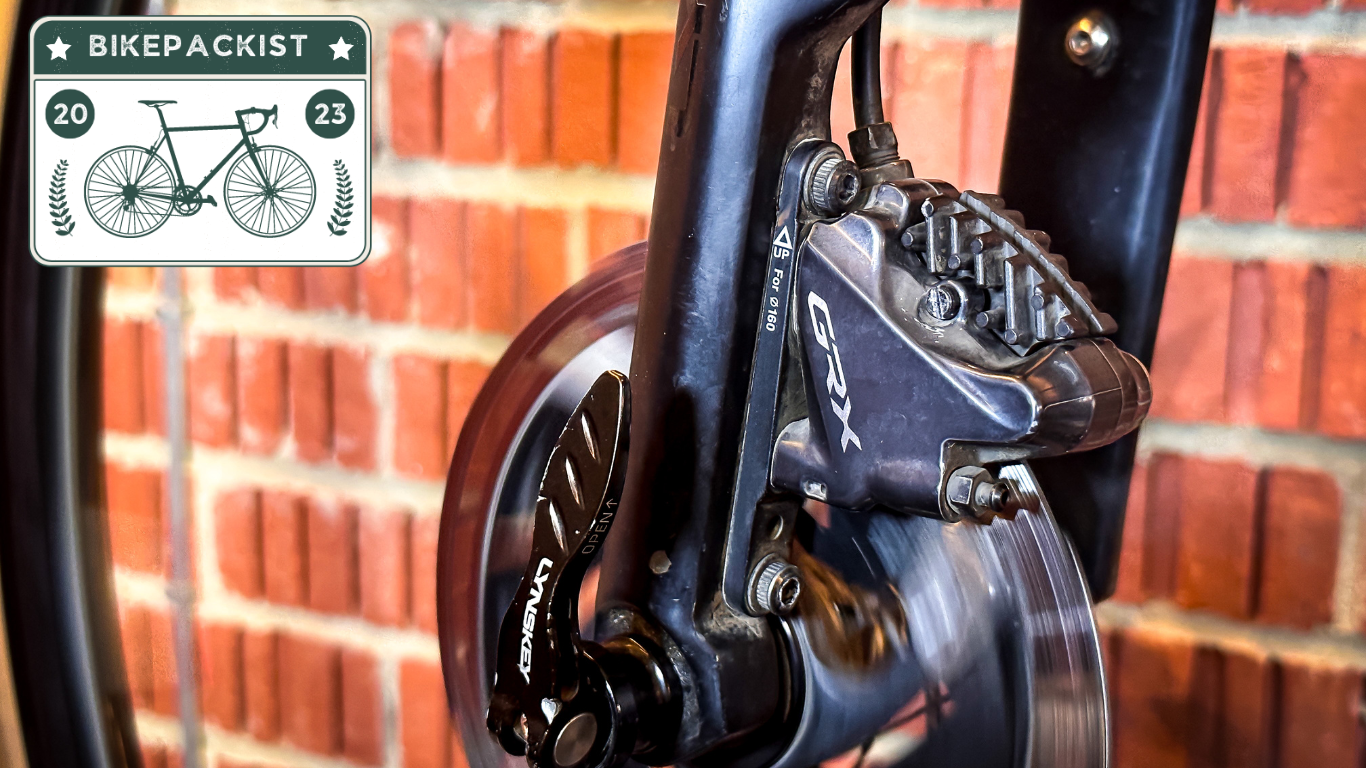
Hydraulic disc brakes are currently the most common type of disc brakes on modern bikes. They are incredibly powerful, reliable, and responsive when used. They are the ones to have for many cyclists and can make you feel very confident on sketchy descents.
Hydraulic disc brakes are operated using brake fluid. Pulling the lever pushes fluid all the way down the system to the caliper, where it can push the pads closer, gripping the disc. To be installed, they require to be bled, which is the process of removing air from the system.
A hydraulic brake system is very easy to use and have an amazing ability to self-adjust as the pads wear down. Some of the biggest providers of hydraulic disc brakes are Shimano and SRAM.
Pros
- Very Powerful
- Very Reliable
- Self-Adjusting
- Easy On The Hands
- Very Low Maintenance
Cons
- Harder To Work On
- Require Bleeding If They Break
- Costly

What Are Mechanical Disc Brakes?
Mechanical disc brakes also known as cable actuated disc brakes are mainly seen on older bikes and budget bikes. They are very cheap to buy, very easy to install, and very simple to maintain. For many cyclists, mechanical brakes are just much simpler, and sometimes that’s better.
Instead of using fluid a mechanical disc brake bike uses cables, just like a normal bike brake or gear shifter. When the lever is pulled, it creates tension in the system, which pulls the caliper and brings the pads closer together, gripping the disc.
Mechanical disc brakes are easy to work on, which could be a big advantage on a bikepacking trip. They are not the most powerful brakes and can be tougher on the hands compared to hydraulic. Common brands that make mechanical disc brakes are Tektro And TRP.
Pros
- Easy To Repair
- Easy Installation
- Cheap To Buy
Cons
- Less Powerful Than Hydraulics
- Need Adjusting As Pads Get Low
- Cables Generally Require More Maintenance
- Harder On The Hands

Comparing Hydraulic Or Mechanical Disc Brakes Systems
Now, for the fun bit, let’s break down mechanical and hydraulic disc brake systems. Now, we’re going to tell you how they compare in the real world and on a bikepacking trip.
Cost
The first thing to mention is cost. Hydraulic disc brakes cost double or triple the amount of mechanical disc brakes. Also, the brake lever to match and brake pads are very different in price, with hydraulic versions being again double the cost.
If you are building on a budget and need to save cash, then it might be worth going down the route of mechanical brakes over hydraulic brakes. The price difference is vast, and it could sometimes save you a few hundred dollars.

Assembly
Next, we have assembly; again, we have a very big difference here. Hydraulic systems when they need to be installed, and then they must go through the bleeding process. This not only can take time, but it also requires special tools.
Mechanical brakes are much simpler and much like rim brakes. All you have to do is run as cable as you would a rim brake or on your gears. It’s simple and can be done at home with very basic tools. If you are someone who likes to do their own bike mechanics, mechanical is easier.

Performance
There’s no denying that the hydraulic disc brake system can easily outperform mechanical ones with their braking power. They are sharper and much easier on the hands, and I personally find them much easier to feather when you’re on the edge of locking up the wheels and the braking force is at the max.
Mechanical disc brakes still work alright, but they are less powerful. When it comes to bikepacking, the difference is huge, hydraulic brakes don’t mean my hands ache after a day, and I have much more confidence in my ability.

Reliability
Both braking systems are very reliable. Hydraulics are just fitted, and they are left like that. You should only concern yourself with changing the pads when they get a little low. They are very “Fit And Forget”. I have never had a hydraulic system go wrong in many years.
Mechanical disc brakes are reliable, but much more can go wrong, and you will need to work on them a little more often. When I used mechanical brakes for a few races, I tweaked them multiple times on journeys, but it was due to heavy use.

Maintenance
When it comes to maintenance, hydraulics are very easygoing. You just fit them and change the pads when required. It’s that simple: you rarely need to do anything else unless you mess with them in a way you shouldn’t.
Mechanical brakes require a little more attention. I recommend cable inner and cable outer changes often, and you also need to be on top of regular adjustments to ensure the levers work well.
Out of both, you do spend more time working on mechanical brakes over hydraulic. Although they are much cheaper to repair, they do require much more attention, especially in servicing.

Which Disc Brakes Are For You?
Both the mechanical and hydraulic disc brake system are excellent, and they have a lot to offer the rider when it comes to bikepacking. In certain situations, you might favor one over the other, but in my opinion, hydraulics are the future.
Hydraulic disc brakes not only are much less maintenance, but they are easier on the hands and just so much more powerful. They need no adjustments even after thousands of miles and are very reliable.
There is a place for mechanical brakes too. If you want to keep the budget low and are not doing anything too extreme, mechanical brakes will be just fine. You might need to make adjustments more often and change cable inners and outers, but they will stop you well.
In my opinion, it comes down to personal preference. I have had great experiences with both, and I’m sure in the correct situations, many riders would feel the same. If you want trouble-free, go hydraulic. If you’re happy to do a little more maintenance and have a bit less power, go mechanical.

A Final Note
Mechanical Vs Hydraulic Disc Brakes
Choosing between mechanical and hydraulic disc brakes can be challenging. They are both excellent systems and, although they do the same job, work very differently. We hope you enjoyed our article and know what you need from it. On my new Yoeleo G21 I will be installing hydraulic disc brakes!
If you enjoyed this article you might like How To Train Fro Bikepacking, What Are The Best Bikepacking Pedals, and What Is The Best Mixed Terrain Bikepacking Bike?
2 responses to “Hydraulic Or Mechanical Disc Brakes? Best For Bikepacking”
[…] you enjoyed this article, you might like Hydraulic Or Mechanical Brakes For Bikepacking, Dealing With Dogs While Bikepacking, and 20 Top Tips For Beginner […]
[…] bike will have them. Disc brakes are much better when it comes to stopping power. They come in both mechanical and hydraulic versions and are very easy to […]