When I first started bikepacking, I always tried to push myself to the limit. I wanted massive mileage each day and wanted to be traveling as quickly as possible. Before I knew it, I got myself into self supported ultra cycling events with other like-minded people. What does it take to grow from a bikepacker to an ultra cyclist?
Throughout my self supported ultra cycling career and on all my bikepacking adventures, I have always come home to reflect on how I can improve and get better. Going into racing was a huge learning curve for me, and I struggled to make the adjustments.
When I first started, I was just happy to complete a race, but eventually, I ended up finishing in the top ten in most races I was entering. In this article, I will tell you what needs to change to make that happen. In bikepacker to ultra cyclist, we will be discussing:
- What Is Bikepacking?
- What Is Ultra Cycling?
- Bikepacker To Ultra Cyclist Tips And Advice
- Bikepacker To Ultra Cyclist: A Final Note

What Is Bikepacking?
Bikepacking is where you take a few small essentials and go on an adventure with your bike. You could go on a road adventure cross-country or out into the wilderness for peace and quiet.
Bikepacking is about escaping and exploring with a lightweight bike setup. There’s no need to rush. You can enjoy the sights and sounds, knowing you can end up wherever you want without worrying too much about time.

What Is Ultra Cycling?
Ultra cycling is just like bikepacking, but you’re racing. You need to be as light and as fast as possible. It’s not rare to have to cycle through the night, and every second counts, so the least amount of sleep you can take, the better.
A good example of an ultra cycling race would be the Transcontinental. This is a race across Europe where the rider must cross checkpoints as quickly as possible. Some races have set routes, and for others, you can pick the routes between checkpoints yourself.

Bikepacker To Ultra Cyclist Tips And Advice
When I went from bikepacking to ultra cycling, I had to learn a lot and made a huge amount of mistakes. If I could go back and give myself some advice on how to get fast and competitive quickly, here’s what I would be saying to myself.

Hugely Limit Time Off The Bike
If you want to make good daily distances and still get enough recovery when you sleep, you must limit time off the bike. You would be so surprised at how many miles and sleep you lose over a day, taking little stops.
When you get to a shop, you shouldn’t need 40 minutes to go in, find what you need, refill your bottles, and then sit there eating. Fifteen minutes is enough to grab food, refill water, and snack. You can eat and drink the rest on the bike.
It’s important to do your best to not to keep stopping. If you were to stop six times a day for twenty minutes, that’s two hours gone, which could equate to thirty miles. Over a seven-day race, that’s over two hundred miles lost.
Sleep is also a big factor. Obviously, you need it, but it’s important to take what you need and try not to get into the habit of laying in. I personally aim for an average of 3 to 5 hours for each day of racing. Sometimes, I’ll go through the night, but it always catches up with you.

Essentials Only
When I first started racing, I took much more than needed. Extra jackets, spare gloves, mascot, and a multi-tool, which weighed around 300g. I thought they were needed, but when I returned from a trip and found that so little of it was used, it needed to change.
If you want to be fast and make the work easy for yourself, the kit has to be incredibly minimal. Only take the clothes you need, any tools and spares, keep as light as possible, and if you consistently don’t use an item you’re taking that isn’t essential, get rid of it.
After years of ultra racing, my kit and bike weight went from 18 kg without food and water all the way to 12 kg because I didn’t use so much of it. I once ended up taking a hoodie all the way across Europe and didn’t wear it once.

Bike Fit And Adaptations
A bike fit is an essential process for ultra racing. It’s where a professional will fit you to your bike so you’re riding in a perfect position. These can cost up to $400 and take as long as a day, but they stop injuries, make you faster, and are very comfortable.
On top of the fit, I have always found myself making little changes throughout my career. Shortening or lengthening the stem, lightly adjusting the position of the saddle, and even changing the handlebar width.
This is because little changes can really make a difference in an ultra race. If you’re racing on gravel, then it’s nicer to have wider bars and a more upright position. On the road, you might want to be a little more aerodynamic and aggressive.

Performance Components
When it comes to racing, performance components make a huge difference. They make you lighter and faster and can offer better aerodynamics. When I first started bikepacking, I was on very basic cycling equipment. Steel frame, aluminum wheels, and basic groupset.
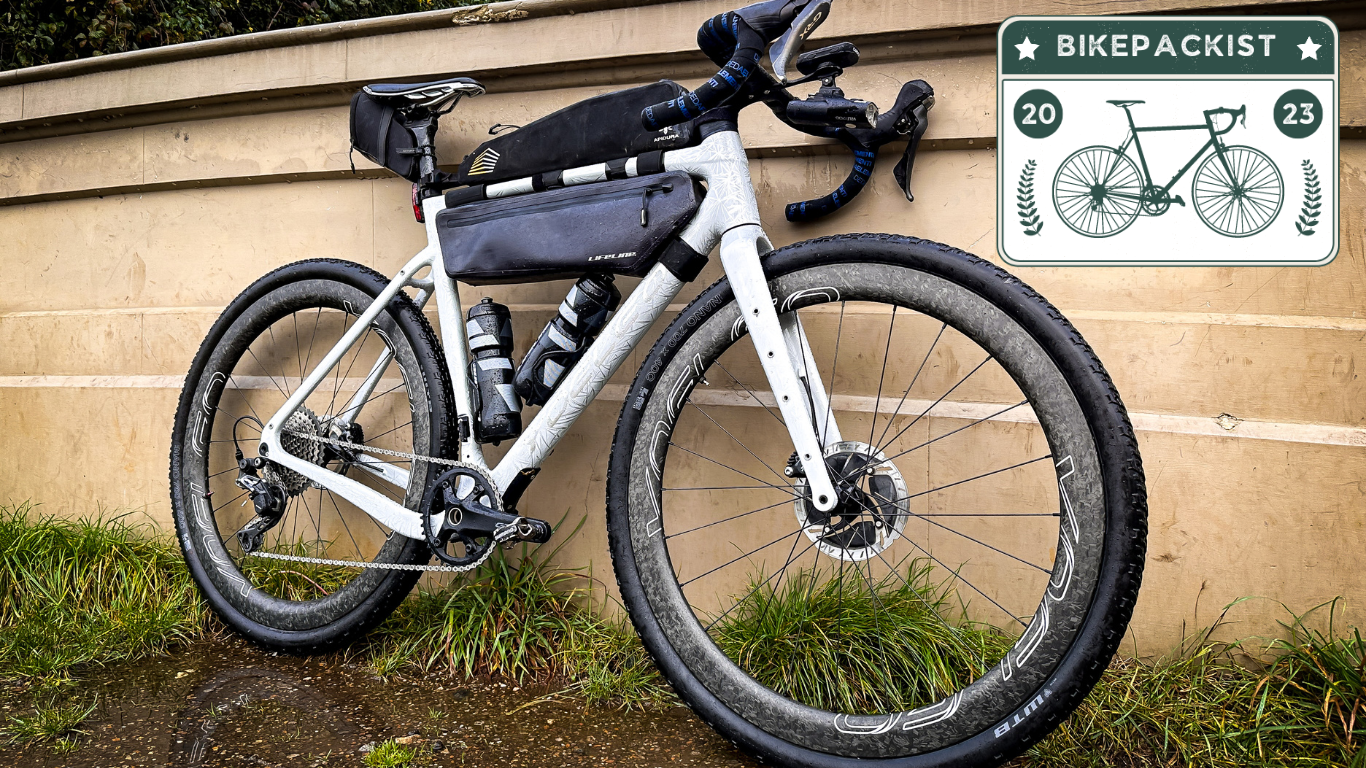
Over the years, I have built up my bikes to be beasts. Currently, I have a full carbon fiber bike with carbon wheels, seatpost, handlebars, and a high-end groupset. It weighs 8.5kg to 9kg without bags and bottles, which is incredibly light.
The difference is huge, and you can see an extra 2mph when riding, which is massive. Over a day of riding 15 hours, that 30 miles extra. It’s also important to understand that many performance components are way more reliable. Good bikepacking bags go a long way too!

Route Planning And Pinning
When I used to go into bikepacking races, I would quite happily turn up with the route and let the good times roll. Although a lot of fun, you lose a lot of time not knowing what’s in front of you, and it also stops you from focusing on the riding.
Now, I study the route, not just for big climbs or off-road sections, but I also plan where I want to sleep and resupply options. It makes the racing so much easier because you have a rough idea of where stuff is and when it’s open.
I use applications such as Komoot to drop pins along the route to see everything I need to know in a race or on an adventure. It not only keeps you organized but adds a lot of confidence to your riding.

Mental Toughness
If you want to be good at ultra cycling, you have to be mentally tough. Some riders have this when they start, and others need to learn it as a skill. I personally had to learn it. When going into races, you need to be focused, strong, and, no matter how tired you get, be a problem solver.
Ultra cycling will give you great times and also some very tough ones. It could be midnight, and you could be outside in the rain fixing a broken tire. You can’t just stop and give up. You need to get your head in the game and get on.
A positive attitude goes a long way, and if you can stay strong when times are hard, you will be an excellent ultra cyclist. Many times, a hard situation has gotten the better of me.

Understanding Your Nutrition
Eating is one of the biggest challenges you will face when ultra cycling compared to bikepacking. When bikepacking, there’s much less intensity, and although you have to eat more than normal, it’s not ultra cycling levels.
Just say you put in 15 hours one day of ultra cycling. At 500 calories an hour, that’s 7500 calories plus your daily amount, which will be 2000-2500, and extra calories for recovery, which is over 10,000 calories per day.
That’s 50 Mars bars worth of calories and a huge amount of food to consume. It’s important to learn what your body can eat a lot of and ensure that you have a nutrition plan ready to go into a race or event. MyFitnessPal is a great app to help you track and understand food.

Training Hard
Another very important factor when it comes to ultra cycling is the training. Instead of just getting miles in for bikepacking, you need to step it up and focus on more elements of success. I personally do a lot more than just ride when I’m training for a race.
I firstly go from just base miles outdoors to power sessions on the turbo training. I also have a strength training program and also do regular stretching. All this not just helps prevent injuries, but I feel it steps me up to another level as far as FTP and fitness goes.
As a personal trainer and someone who has been training for many years, I know it’s not always about quantity when it comes to ultra cycling, but quality and focusing on issues that might arise. Here’s how to train for bikepacking!

Bikepacker To Ultra Cyclist: A Final Note
Going from bikepacking to ultra cycling is challenging, and there’s much to learn. Most of it comes from experience, but knowing what to look out for makes it much easier. Thanks for taking the time to read bikepacker to ultra cyclist, and good luck in your ultra cycling or bikepacking future.
21 responses to “Bikepacker To Ultra Cyclist: 8 Skills To Adventure Competitively”
[…] comes down to personal preference more than anything else. I have found that in my bikepacking and ultra cycling, full frame bags have been a great bikepacking upgrade and fixed many issues I have had with my […]
[…] an expert bikepacker who has been lucky enough to cycle worldwide, organization is the key to a successful trip. In this […]
[…] it comes to bikepacking and ultra cycling, it’s not always easy. There are times that are tough on emotions. You might encounter logistical […]
[…] Bikepacking and ultra cycling burns a lot of calories and getting nutrition right can be an ongoing battle. Finding food you like and getting enough in is very challenging. Getting into the habit of good, correct eating as early as possible is important. […]
[…] have been bikepacking and ultra racing for over a decade and have found many ways to improve my bikepacking setup without spending any […]
[…] then I have been adventuring multiple times each year. On top of that, I have also been in many ultra cycling races, even beaten some world record breaking […]
[…] this article, I want to tell you 10 things that, as a very experienced bikepacker and ultra cyclist, I wish I had known earlier in my career. It would have saved me so much trouble, haha! Many of […]
[…] and I do rate them. When you look at bikepackers it’s very few that use them. When you look at ultra cyclists, they generally use them 80% of the time. In my opinion, it’s your bike, you do […]
[…] a big adventure cyclist, bikepacker, and ultra cyclist, I always think about preparing for every eventuality if I’m out cycling and need to repair my […]
[…] have been lucky enough to be a user of both, not only on bikepacking adventures but also when ultra racing and even touring. The difference between the two is huge, and I have a rule about what to pick and […]
[…] a seasoned bikepacker and ultra cyclist one of the biggest challenges I have faced is eating correctly. It’s not about just the […]
[…] to fill them up. When it comes to bikepacking, this is a big bonus, especially when it comes to ultra racing, as every second […]
[…] all myself through various mistakes and challenges. From the original skills I learned, I went to ultra cycling and even broke some world records during my […]
[…] have been lucky enough to do a lot of bikepacking and ultra racing. During this time, I learned that being prepared and organized beforehand can make the adventure […]
[…] term scratch comes from long-distance cycling, mainly ultra cycling. It’s when you end an adventure early because it isn’t possible to continue. It’s not rare […]
[…] around six years later, I was heavily into bikepacking and ultra-cycling. I was very competitive, and this was around 2018 when I was racing in the Bikingman series, an […]
[…] The benefits of smaller cranks are huge when it comes to bikepacking. Having the right gearing means you can use less leverage on the pedals, saving your hips and knees from hurting on smaller cranks while training and racing. […]
[…] I love it so much, and it has turned into a career in many ways. At the height of it all, I was ultra cycling all over the world in races and even broke world […]
[…] I own the Bikepackist, and it’s only ever been worked on by me. I’m an ex-semi-professional ultra cyclist who has ridden in many places around the world and even broken world […]
[…] it when it comes to cycling applications? It’s not just an excellent way to see how you are improving over time, but it is also great for looking back at those epic rides you go on and storing them for a later […]
[…] might even want to go into a bikepacking race or event. That competitive feeling is a great way to start feeling a little more enthusiastic and also makes […]