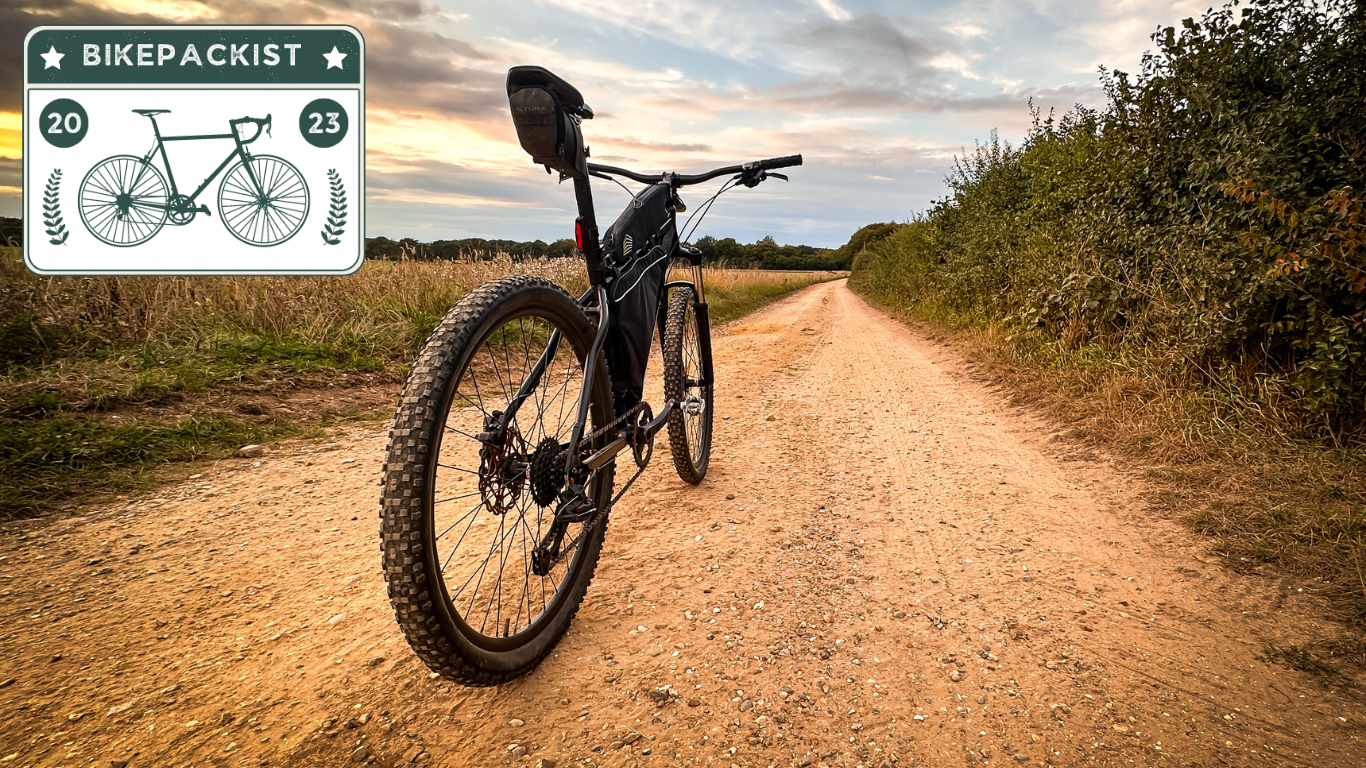
Bikepacking is a great way to have an adventure on two wheels. Although the concept seems fairly simple, the reality is there’s a lot to learn. It is not just cycling with a tent or bivy bag. What you need is 20 beginner bikepacking tips to help you.
As a bikepacking expert who has had many adventures around the world, I have so much knowledge when it comes to light touring. In this article, I want to share some top tips I wish I had known when I started.
Unfortunately, I had to learn the hard way and made many mistakes, nearly ending many adventures early for me. Here’s what you need to know when it comes to beginner bikepacking tips:

Bikefit
The first of our beginner bikepacking tips is a bike fit. This is the process of a professional fitting you to your bike and adjusting it for your body. This can add so much value to your riding. It adds comfort, pedaling efficiency, greatly helps reduce injuries, and much more.
If you’re planning on big miles, then a bike fit can ensure it will be as easy as possible. They can be a big investment, with some fits coming in at $300 or more, but it’s worth it, and you can transfer it to other bikes you might have.
A bike fit is a valuable tool, but there are some situations where you might not feel the need to invest. You can find out more in our Do I Need A Bike Fit Article. If you don’t plan a fit, we highly recommend correcting your saddle height at least.

Micro Bikepacking Adventure
It’s easy to want to go straight into the tough stuff when it comes to bikepacking. I decided my second multi-day trip would be from the UK to Italy. I was completely out of my depth and wished I had learned more before I left.
What I recommend to many new bikepackers is to have some micro-adventures before you leave for the bigger trips. For your first bikepacking trip, a night camping out somewhere local or even a stop in a hotel somewhere that you cycle to and back.
This is the best way to gain confidence and works wonders when it comes to bikepacking. It gives you time to iron out any problems you might have, and you get a taste of the experience of what you will be getting.

Plan Good A Bikepacking Route
A good bikepacking trip can be quickly ruined by having a poor route. I often see many people using busy roads and going on very technical trails just because they haven’t given the route enough care and spent enough time planning it.
Using an application like Koomot, you can plan incredible routes. Not only that, it can give you all the fine details from how much climbing you need to do, the terrain you’re going to be riding on, and a realistic estimated time of how long it will take you. Bikepacking routes range from short and easy to long and challenging.
Route planning can be a lot of fun. Always remember that for every extra ten minutes you spend putting a route together, the more fun you will have. If you are unsure of where the route will take you, enjoy Google Street View or GPX Hyperlapse for imagery.

Train Loaded
One of the biggest shocks for beginner bikepackers is how much difference the extra weight on the bike makes. It completely changes the handling as the weight shifts around, and it can quickly slow you down and zap your energy.
I highly recommend doing a few training rides with a loaded bike. Take all your kit with you and get a feeling for the extra load you are going to be carrying. It is much less of a surprise when it comes to that adventure.
Another great benefit of training loaded is you soon work out what you can get away with taking and what you should be leaving at home. So many beginners end up taking way too much and have very little space for food or water.

Use The Right Bikepacking Bike
If you are planning road adventures, use a road bike. Mixed terrain adventures, a gravel bike or hybrid bike. Mountain biking adventures, a mountain bike. It is important to be on the correct bike for your planned trip.
If you have the wrong bike, it will either make technical terrain very difficult or it will make riding much harder than it needs to be on easy terrain. Imagine trying to off-road on the wrong bike tires? I have made the mistake once and it ruined the trip for me. It’s best to start with all the gear but no idea.

Ride With Others
If you’re looking for an amazing experience bikepacking as a beginner, then riding with others is a great way to go. It can give you a lot more confidence, and you will learn from other riders and your own experiences.
Many Facebook groups put together meets regularly, and some cyclists even run courses for beginners. We highly recommend if meeting with someone to go bikepacking to ensure you know them well enough.

Always Tell People Where You’re Going
If you are going bikepacking, telling a loved one where you are going is always good. If you head into the wilderness where you might not have a reception, it’s good to know that someone will know where to find you if they need to.
You can get trackers from companies such as SPOT. These are great little devices that are able to pinpoint your location even when you might not have a reception. These are often used in bikepacking races. As far as beginner bikepacking tips go it’s an important one to tell people where your going.

Learn How To Eat And Drink… Lots…
One of the biggest struggles for many beginner bikepackers and ultra racers is getting enough food and water in. Riding at a slow pace for many is 400 to 600 calories. Imagine you ride for 5 hours of the day. That’s 2000 – 3000 extra calories that you need to find.
I think it’s really important to approach this in a logical way. Don’t just keep riding until you burn out and eat and drink loads, but take on a little bit each hour to keep going. The minute you’re hungry or thirsty, you’re too late.
It’s also a good idea to think about high-calorie foods you like eating. Remember, carbohydrates are amazing for fueling, and protein is where you get your recovery from. Practice on your micro adventures with different foods.

Learn Bike Repair
Knowing how to fix a puncture is great, but when it comes to bikepacking, that’s not enough. If you plan to go off into remote locations far away from bike shops, then knowing more really helps. I highly recommend learning these extra skills over your time as a cyclist:
- Fixing Punctures And Using A Tire Boot
- Truing A Wheel And Replacing A Spoke
- Breaking A Chain And Installing A Chain Quick Link
- Adjusting Your Brake Calipers And Straightening A Disc Brake Rotor
- Changing Brake Pads
- Adjusting Gears And Replacing A Hanger
- Changing Cable Inners And Outers
Although this sounds like a lot, these skills will not only get you out of a mess, but they will also save you a lot of time and money not having to go to the local bike shops. Invest in yourself and enjoy the benefits. This is also going to teach you bike maintenance beginner bikepacking tips in the process.

Travel Light And Right
When it comes to bikepacking, traveling light makes a really big difference. There’s no point taking stuff you don’t need. It will just get in your way. It’s important to get rid of all the stuff you don’t use on your micro adventures, ready for the big trips.
I used to take so much, but after each trip, I took everything out of the bags and removed what I didn’t use and didn’t feel I needed. A lot of the time, it was clothing and gadgets I thought would improve the experience, but they didn’t.
It’s also important to ensure that you are taking enough. There’s no point taking out the spare hanger to save 20g when, although you might not need it now, it could be the only spare that could save you in certain situations.

Pack For All Weather
The weather when bikepacking can be very cruel to you, and it’s so important you have the correct tools for dealing with it. Even if you expect sunny skies, take a rain jacket. Even though the temperature looks great, have a down jacket.
I got caught out once in The Race Around The Netherlands. The weather looked great, with lows of 5 degrees at night, sunshine 90% of the time, and tailwinds for the majority of the race. Unfortunately, that’s not what happened. The weather turned on the second day without warning.
I had storms, freezing nights, headwinds, and it was so miserable. I should have taken warm clothing and been prepared, but I just had a summer kit. It not only made the race awful for me, but I got a bad knee injury due to the cold and couldn’t ride properly for nearly two months. It’s one of the beginner bikepacking tips I wish I had earlier.

Understand There’s Highs And Lows
Before I started Bikepacking, I would enjoy watching people’s adventures on YouTube, Twitter, and many more platforms. Everyone made it look like you would jump on the bike, and the whole adventure would just be fun 100% of the time when I quickly learned it’s not always like that.
On my first few adventures, I realized there are just as many lows as there are highs. Some days, the weather is awful, and you are stuck in a headwind, struggling to find a hotel. Other days, you have sunshine, tailwinds, and find the perfect campsite.
It’s important that you understand some days, bikepacking is amazing, but there’s also hard times when it can feel too much. Bikepacking can be hard. I’ve had bikepacking races where I feel so pushed to my limit and challenged that I haven’t had much fun.

Safety Is Everything
Here’s one of the most important beginner bikepacking tips. Dark colors may be slimming, and having your lights on all day might seem pointless, but it really isn’t. When I first started bikepacking, I wasn’t very good when it came to safety. I neglected it and was more interested in looking cool than standing out.
After a few trips to countries where the roads were smaller and the drivers got closer, I realized that I needed to make a change. There were too many close calls for my liking, and I used to get nervous on certain roads and at night.
I now wear high-viz or stand-out clothing night and day, have lights on day and night, and would much rather take a longer, safer route on a quiet road than a quicker, busier road. Always remember to be seen and be safe.

Self Care
It’s really easy on a multi-day bikepacking trip where you are in the wildness to forget basic self-care. I have done this so much in my time bikepacking. It only ends one way and generally isn’t a very good outcome.
Staying on top of suncream, chamois cream, brushing your teeth, and having regular washes are vital. This not only protects you from added challenges to your adventure, but it also keeps you in tip-top condition when riding.
I have seen many great bikepackers bail on adventures due to not looking after themselves. It’s a shame because things like sunburn and saddle sores can be easily avoided just by spending a few minutes throughout the day focusing on you.

The Useful Items Few Tell You About
I have seen many kits lists online for bikepacking, and they are generally very minimalist. What a lot of bikepackers don’t tell you is there are a few extra items that I find really improve the experience. Here’s what you need to know:
- Drawstring, Packable Rucksack (Great for carrying lots of food and night supplies)
- Insulation Tape And Hairbands (There’s little that can’t be fixed with these)
- Feed Pouches (So useful for carrying food and reminding you to eat and drink)
- Aerobars (The extra position just makes so much difference to comfort)
- A GoPro (You will forget so much of your adventure film as much as possible)
- A Good Pump (Poor quality pumps are a recipe for disaster)
- An Excellent Top Tube Bag (You use this so much bikepacking)
Although these sound quite basic and not always essential gear, I rarely see them on kit list, and they are incredibly handy. I have found over the years, they have given me an edge over my competition when racing.

A Positive Attitude
A positive attitude is one of the best things you can take with you on a bikepacking trip. There are going to be times when you are tired, angry, and feel low. Bikepacking is fun because it isn’t always easy.
Having a strong positive attitude to brush off the bad times will make adventures so much more enjoyable. A great friend of mine and an amazing bikepacker had such an amazing attitude, and he had so much more fun despite challenging trips and countless issues.
It’s always good to remember you are there to have fun, you’re lucky to be on the adventure, and there are probably a lot of people wishing they were you even in the tough times of your adventure.

Be Adaptable
The biggest lesson many bikepackers learn very quickly is that things rarely go to plan. Sometimes, you don’t make the progress you need on the day, or you might get much further than you thought.
It’s important to learn to be adaptable. Having the ability to work with plans that change is such a great skill when bikepacking. I would beat myself up about things not going to plan, but I soon learned that that’s what makes a great adventure.

Have Fun
It’s really easy when bikepacking to make it a challenge, and it all gets a little too serious. I started racing after a few bikepacking trips, which took all the fun out of my bikepacking adventures.
Looking back on some adventures, I wish I had had more fun and enjoyed the experience a little more. It’s easy to get caught up in the challenge when that’s not what bikepacking is about. It is about having fun and enjoying the miles, no matter how tough.
Take Lots Of Pictures And Video
I have been lucky enough to do a lot of different bikepacking trips and have been on some incredible bike touring adventures. I always tell new bikepackers to take lots of pictures and videos. With smartphones these days being so excellent, there’s no excuse.
I say this because when bikepacking, so much happens, and when you are tired, you tend to forget the memories you’re making easily. I often look back at my videos on YouTube, and there’s so much I have forgotten over the years. A top beginner bikepacking tips is record everything you can.

Ensure You Have Waterproof Bike Bags
When I first started bikepacking, I didn’t have very much money. I used to have to buy the cheapest of everything, and many of the bikepacking bags I used were not waterproof. I had to put camping gear and clothes in Tesco bags to attempt to keep things dry.
Bags that are not waterproof make for some miserable bikepacking. Especially when your camping equipment and sleeping bag is all soaked and spare clothes are damp and smelly. If you can invest more money in waterproof bags, it makes a huge amount of difference.
A Final Note
Thanks for taking the time to read our beginner bikepacking tips article! If you enjoyed this, you should subscribe to get alerts of new posts in your inbox or want to watch some content in video form on our YouTube Channel.
Other articles you might enjoy are How To Deal With Dogs When Bikepacking and What Is The Best Kind Of Bike For Mixed Terrain Bikepacking.

Author
Authored by Robbie Ferri, a distinguished Ultra Cyclist hailing from the United Kingdom. With profound expertise not only in cycling but also in the art of bike construction and collaboration with prominent industry-leading brands.
www.ridingwithrobbie.com
Robbie Ferri Instagram
Robbie Ferri X
6 responses to “20 Top Beginner Bikepacking Tips”
[…] If you enjoyed this article, you might like Hydraulic Or Mechanical Brakes For Bikepacking, Dealing With Dogs While Bikepacking, and 20 Top Tips For Beginner Bikepackers. […]
[…] those miles in. When your event comes around, you not only have an advantage over others who haven’t trained, but you also can be confident knowing you’re […]
[…] to read this article. If you enjoyed this, you might like, How To Deal With Dogs When Bikepacking, 20 Top Tips For Beginner Bikepackers, and Best Bikepacking […]
[…] Before going on an adventure, it’s really good to test all your kit fully loaded while riding. Firstly, it will give you a good feel for what it’s like to ride with and highlight any problems you might have. This is one of our 20 top tips for beginners. […]
[…] you enjoyed this article, you might like 20 Top Tips For Beginner Bikepackers, Bikepacking Injuries, and Best Bikepacking Kit […]
[…] you enjoyed this article you might like 20 top tips for beginner bikepackers, What are the best bikepacking pedals, Bikepacking injuries how to avoid […]