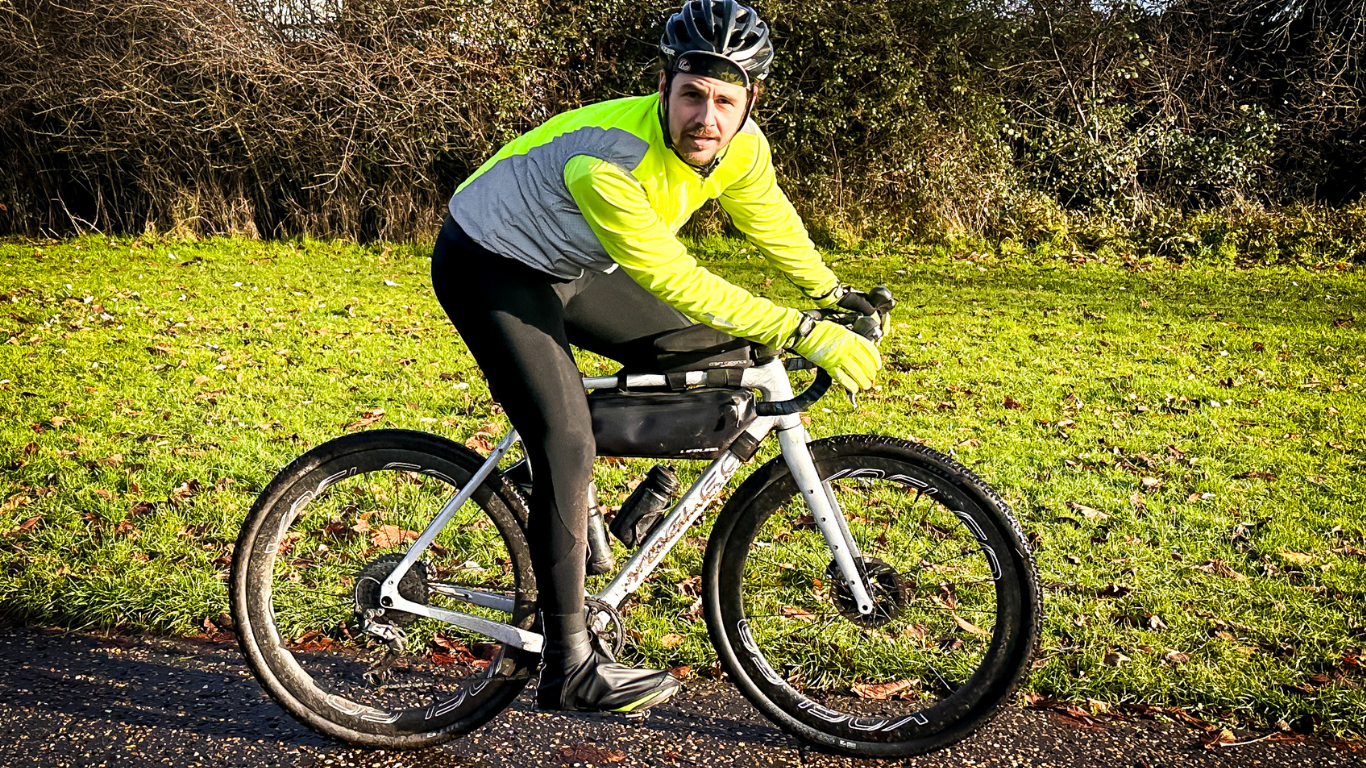
Winter in many places is a tough time to ride a bike. It’s super cold, the days are short, conditions are much more challenging, and it’s incredibly tough to stay motivated. Many cyclists take the whole of winter off, and I understand why, but you don’t have to with the right winter cycling advice.
As a very experienced cyclist who has gone through many winters without an indoor trainer and has been one of the only people to cycle up Alpe D’Huez in winter, I have learned a lot along the way.
In this article, I will tell you my top winter cycling tips to get you through till spring and make the experience more exciting and enjoyable! Let’s go! If you want this in video format, check out the box below!
1. Dress Right
When I cycle in winter, I don’t take any chances regarding clothing. I used to, and because of that ended up incredibly cold at times. I now take a frame bag and often dress well over the temperatures I’m going into. I wear:
- Winter Bib Tights
- Base Layer
- Thermal Socks
- Winter Jersey
- Windproof
- Gilet
- Cycling Cap
- Thick Gloves
Doing it this way means you can remove layers as you ride, put them into the frame bag, and always be at the right temperature for the miles you’re riding. Being cold wastes so much energy you could be using to pedal.

2. Tin Foil Feet And Double Gloving
In the past, I have struggled with cold feet on longer rides. I tend to wear two pairs of socks and put some tin foil in between. This has saved my feet many times, and I have always used this trick on those really cold days.
If I’m going out riding in winter and know it will be cold and wet, I take two pairs of gloves. When gloves get wet and cold, they start getting really uncomfortable. Holding out until the wet weather passes and then getting dry gloves on really helps.

3. Consider An Indoor Trainer
Indoor turbo trainers are fantastic and give you the ability to ride indoors. They can help structure your workouts, and many will automatically change the resistance when you’re riding in applications such as Zwift or Rouvy.
They are a great investment for many cyclists when you start getting incredibly poor or dangerous conditions. In the UK, where I live, I lose about 6 weeks to lots of ice at the start of the year, so I spend all my time getting fitter and faster on the trainer.

4. Consider Joining A Gym
Cycling in winter can be challenging, and often, it’s easy to get unmotivated and not want to go outside. Why not join a gym that has cycling facilities? Not only do you get the warmth, but you also get to enjoy indoor cycling classes and meet new people.
You also then get the option to cross-train. You could do weight training, yoga, or pilates classes, or even work on that core strength. Some of the best ultra cyclists use gyms all year round for peak performance.

5. Don’t Think Just Do
When I first found myself cycling in winter, it took a lot of motivation to get myself out the door into the cold conditions. The first 20 minutes of the ride were really challenging, and I often did not go out because I talked myself out of it.
As I got more experienced with winter riding, I realized it’s easier sometimes to not think about it and just get outside and go, provided the conditions are not too bad. I would not question going out. I’d commit to it and get on with it.

6. Be Safe, Be Seen
Winter is not the safest time to ride a bike. The days are darker and shorter, drivers lack visibility, and the roads are often busier. I always recommend ensuring you are as seen as possible to be safe.
I wear a high-vis reflective gilet and a high-vis windproof, and I have my lights on even during the day. It’s even important to make sure that your road positioning is on point. Always remember to be dressed like a cyclist you would want to see if you were driving.

7. Equip Your Bike For Winter
If you want a good winter cycling experience, you need your bike set for it. This will not only add comfort and help protect your bike but will also keep you dryer and cleaner on those longer outings.
Use fenders, and consider some larger, grippier tires. You might even want to add powerful lights and a frame bag to help carry extra clothing you might need in poor conditions.

8. Off-Road Bikes
When it comes to winter, I switch out bikes. Although not a solution for everyone, for me, it’s really helped not just mix up my training but keep me off the roads where there’s often slippy ice. Using a mountain bike or a gravel bike is ideal on local trails.
In winter, you won’t be breaking any speed records, so why not use a bike with wider tires, a relaxed geometry, and something that can take you off the roads and onto those quiet trails, which will be super fun?

9. Know When To Stay Inside
It took me a few icy spills on my bike to realize there’s a time when it’s just not safe to go out. I remember riding around a bend, the bike going out from under me and taking a lovely tumble while sliding down the road, luckily with no cars around.
I don’t mind going out in the cold, or even if it’s a little wet, but when it’s icy, I either get on the trainer or leave the miles for another day and maybe stay in and do some strength and conditioning or stretching.

10. Stay On Top Of Hydration And Nutrition
Many cyclists tend to heavily neglect their hydration and nutrition when it’s cold. I know this because I was one of them. I would ride for 3 hours without a sip of water, but I would have found room for a coffee or two.
It’s important that although unpleasant and you might not feel like it, you must keep yourself fueled and eating and drinking. Not being fueled will make you lack power, lower your mood, and make you cold.

11. Keep On Top Of Bike Maintenance
Winter conditions are not great for your bike. The grit on the road wears your components down much quicker than in the summer months. This is why so many cyclists opt for winter bikes that have cheaper components.
Whatever bike you’re using, you must keep on top of the maintenance. Regular degreasing and oiling, tire pressures always in a good place, and ensuring bearings are running smooth alongside brakes working well. This will not only save you money but give you a better experience on your rides.
A Final Note: Winter Cycling Tips
Cycling in winter is tough, but it comes with a lot of rewards. It toughens you up as a cyclist, keeps you fit when others might be letting themselves slip, and it’s a great time to reflect on the season and train without events interrupting you.
If you enjoyed this post you might like Best Bikepacking Pedals, 20 Tips For Beginner Bikepackers, and 10 Best Bikepacking Upgrades.
6 responses to “Winter Cycling: 11 Top Tips To Get You Through To Spring”
[…] the route you want to take. If you are a rider like myself who lives in the UK, then ever-changing weather conditions mean having more spaces goes a long […]
[…] down jackets and gilets have been a game changer for me. I use them when temperatures go around 0 degrees, and it’s incredible for not just taking the edge off the cold when riding but also when you wake […]
[…] many Alpine passes in winter. I even went up Alpe D’Huez in December. I’ve camped in temperatures as low as -5 and been in storms with 40-mph […]
[…] Jebel Shams. Not only did I have to walk for an hour or two as I was so low on food and dehydrated. It got cold, and one of the best views in Oman I saw was at night and one of the starriest skies […]
[…] not only made me feel much safer but also made me more visible on the road, and you know you have done a considerable amount for your personal safety. It’s also good to […]
[…] took me a long time to realise just how useful buffs and neckwarmers are. Firstly, they keep your neck warm on a long, cold day, and they also protect your neck from […]